
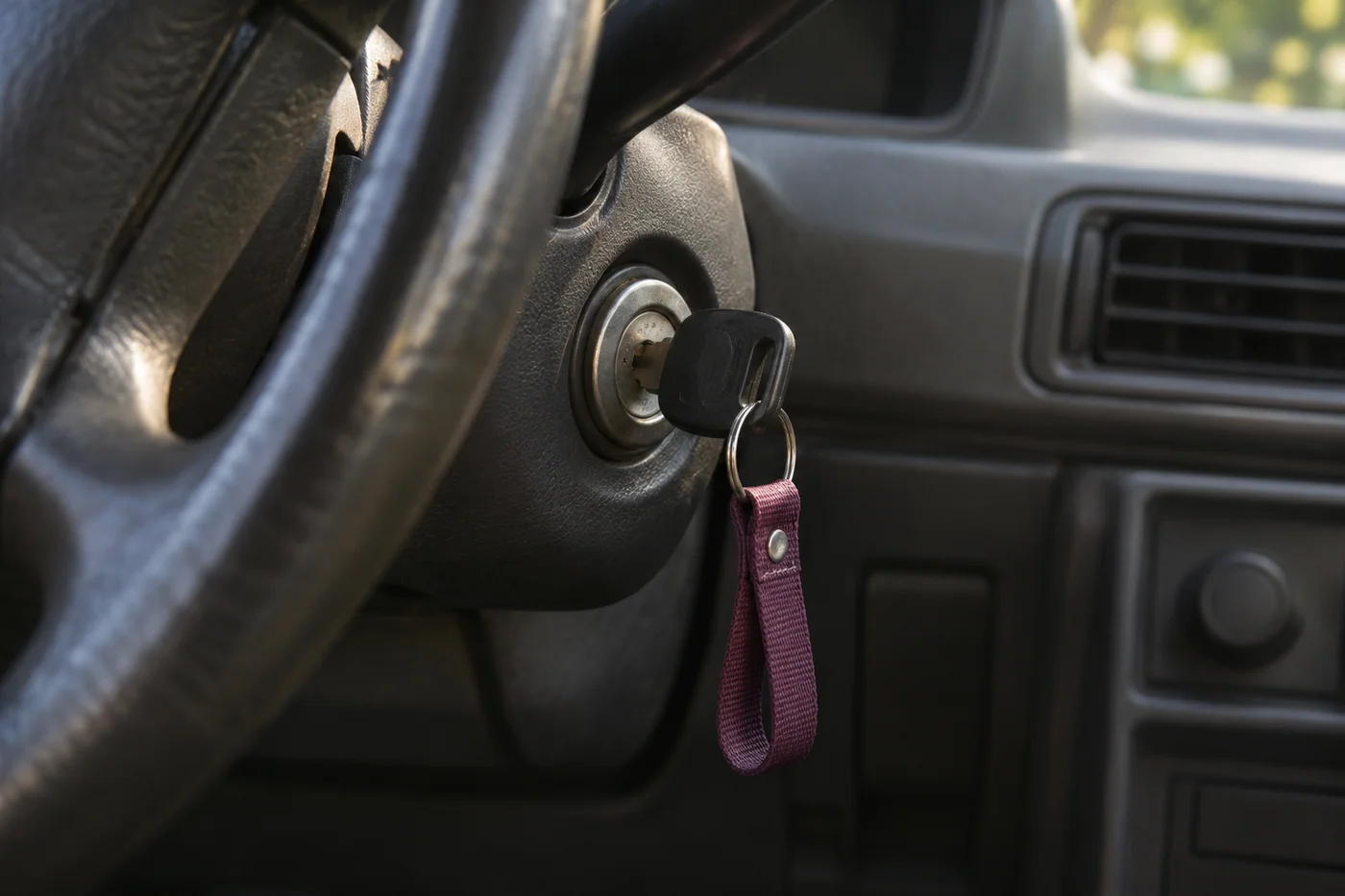
The drive is over. You've parked and turned the engine off, but the key is still held in the ignition. It may release later, or it may remain trapped every time you try to remove it.
That sequence is worth describing exactly. The phrase key stuck in ignition is also used for a key that won't turn at all. Those are different observations, and they shouldn't be treated as proof of the same fault.
Four questions that keep the symptoms separate
Can the key enter the ignition normally? Can it turn through the positions intended for the vehicle? Does the vehicle start when it should? Can the key be removed at the appropriate point afterward?
You may already know the answers from ordinary use. There is no need to repeat a difficult action or use more force to test the limits. The useful information is the part of the normal sequence that has changed.
A key that turns and starts the engine but won't release afterward provides a different history from a key that cannot turn from its first position. An intermittent problem is also worth mentioning, without assuming that waiting proves the cause is harmless.
Keep the model-specific instructions attached
Vehicles can have different ignition and key-removal arrangements. A procedure that belongs to one model should not become a universal tip for another car.
The 2020 Chevrolet Colorado owner's manual, for example, distinguishes LOCK/OFF, ACCESSORY, ON/RUN and START, with specific instructions for stopping and key removal. It also discusses steering-lock binding that can prevent movement out of LOCK/OFF. Those are distinct circumstances in that vehicle's information.
That manual example does not establish why a particular key remains retained after the owner reports parking and turning the engine off. An assessment still needs the actual vehicle, equipment and condition.
Describe the current state plainly
Have the year, make and model ready. Explain whether the engine is off, which ignition position you observed and whether any relevant message was visible. Mention a recent change or impact only if it actually happened.
If the key or ignition has felt different over time, include that history. A worn-looking key is an observation, not proof that replacing it will resolve the problem. The same is true of a new sound or a fault that disappears temporarily.
If another person has already attempted work, say what was changed. That helps keep the next assessment from relying on an incomplete picture.
Avoid turning the complaint into more damage
Do not pull hard on the key, dismantle the steering-column area or follow a bypass or electrical-release suggestion intended for another vehicle. The visible ignition opening is only part of the system involved.
If the vehicle cannot be left safely, explain that when arranging the appropriate assistance. The immediate practical situation and the cause of the retained key are related, but they may require different decisions.
Follow the applicable owner information for normal operation. If the expected sequence is not working, an appropriate inspection is more useful than a series of improvised release attempts.
What to ask about the proposed work
Ask what was found and why the suggested repair fits the complaint. Making a new key and repairing another part of the vehicle can be very different jobs.
If a replacement key is suggested, ask how it relates to the retained-key complaint. If the matter requires another specialist or a vehicle service department, that should be made clear before unrelated work is agreed.
The car locksmith page connects this problem with other vehicle-key requests. The replacement key page is useful when a new key is actually part of the proposed result.
A Lakewood-area request
Use the actual vehicle location when checking assistance, whether it is in Lakewood or a surrounding city such as Torrance. A parking destination and permission to work on the car should both be clear.
Call 562-353-4930 to check help for the vehicle. A simple account of what worked and where the sequence stopped is enough to begin.
After any work, understand what changed and check the agreed normal functions with the person completing it. The aim is to resolve the actual complaint, not merely give the symptom a more technical name.
Questions worth asking
Does a trapped key always mean the ignition lock is worn?
No. The symptom alone does not establish the cause or the correct repair. The actual vehicle and operating state need assessment.
Can I use a release method shown for another car?
Do not assume it applies. Ignition arrangements and instructions vary, and improvised release or bypass methods can create additional problems.
What if the key releases after a few minutes?
Describe that intermittent pattern. A delay is useful history but does not establish why the fault occurs or show that it has been resolved.