
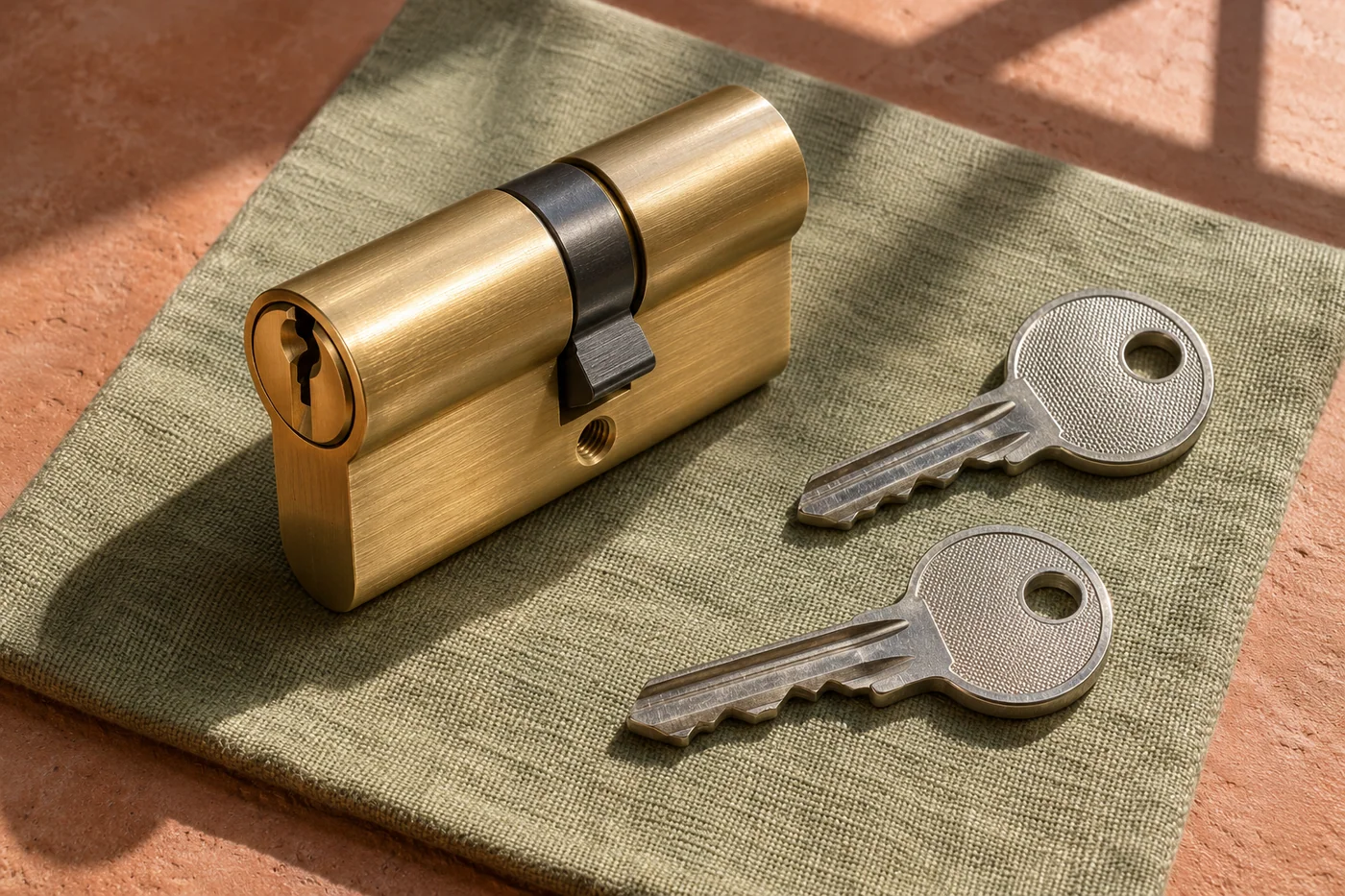
You can be happy with a lock and unhappy about who may have a key. That's the distinction behind many rekeying requests.
Lock rekeying in Lakewood, California concerns the key relationship inside suitable hardware. It isn't the same as buying new handles, changing a keypad code or repairing a door that won't close. Keeping those requests separate makes the choice clearer.
Start with the reason for the change
A move, a missing key or a change in the people authorized to enter can all prompt a review of keyed access. You don't need a failed lock to have a reason to change that access.
Describe the intended result: perhaps the old household keys should stop working, or a particular room needs separate access. Avoid assuming every lock on the property is compatible just because the keys look similar.
For a rental, shared entrance or business premises, confirm who can authorize changes. An individual unit and a communal entrance may be managed by different people.
What rekeying doesn't fix
If the key is stiff, the handle is loose or the door doesn't stay shut, include that complaint. Rekeying alone isn't a general cure for mechanical wear or poor operation.
A lock repair assessment can establish whether the existing hardware is worth retaining. It may be possible to address both the physical fault and the access change, but the work should name both outcomes.
Likewise, a lock that no longer fits the intended use may call for different hardware. The choice depends on the actual entrance and condition rather than a promise that every lock can be rekeyed.
One key for several doors?
That can be convenient when the hardware supports it. It is not automatic. Different lock families or keyways can limit which cylinders can work together.
There is also a household decision to make. A gate, a storage room and the main entrance don't necessarily need the same group of keyholders. Convenience should fit the access arrangement you actually want.
List the keyed openings that matter to the request. You can include a door you rarely use, but there's no need to assume a lock has a particular internal design based on the age or appearance of the house.
Keep other access systems in view
A changed mechanical key doesn't alter a garage remote, keypad code or app account. If those are also part of the change, identify them individually. The home-lock page helps separate the entrance hardware from the wider household setup.
After the work, the authorized person should understand which new keys belong to which locks and what has changed. Keep obsolete keys clearly separate so they don't become a source of everyday confusion.
Call 562-353-4930 to discuss rekeying in Lakewood. The hardware and the change you want will determine what is suitable.
Questions worth asking
Will rekeying change my handle or the outside appearance?
Rekeying concerns the keyed mechanism, so retaining suitable existing hardware may be possible. Any replacement parts or other changes should be explained for the actual lock.
Can all locks be put on one key?
No. Compatibility and the intended access arrangement have to be checked. Similar-looking keys or handles do not establish that compatibility.